Jump to a section
Kokomo is a mid-size Indiana city where a paycheck still buys a yard, a garage, and a Saturday that is not spent in traffic. People move here for manufacturing and healthcare jobs, for schools they can name, and for a cost of living that still looks reasonable next to Carmel, Westfield, and the rest of the northern Indianapolis suburbs. Ryan and Steve live and lend in this market, so the first question we answer is not “which loan?” — it is whether Howard County is the right place to put down roots.
You get the convenience of a real city — groceries, doctors, dining, parks, and youth sports in town — without metro prices or a 45-minute school drop-off. Neighborhoods range from mid-century ranches near Indian Heights to newer subdivisions on the fringe and acreage just outside city limits.
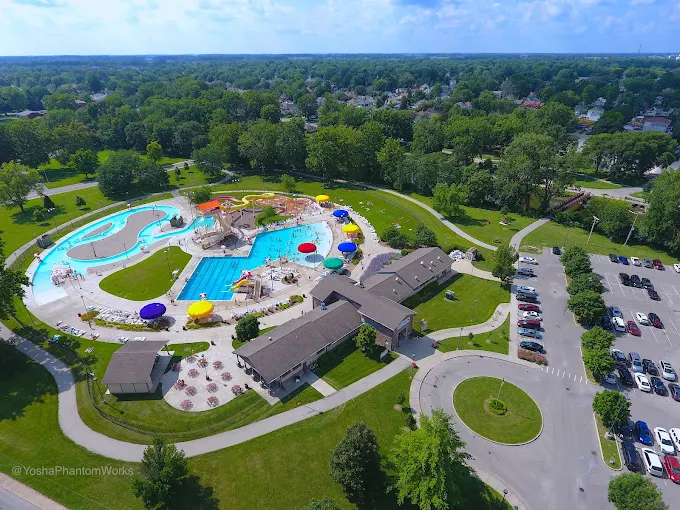
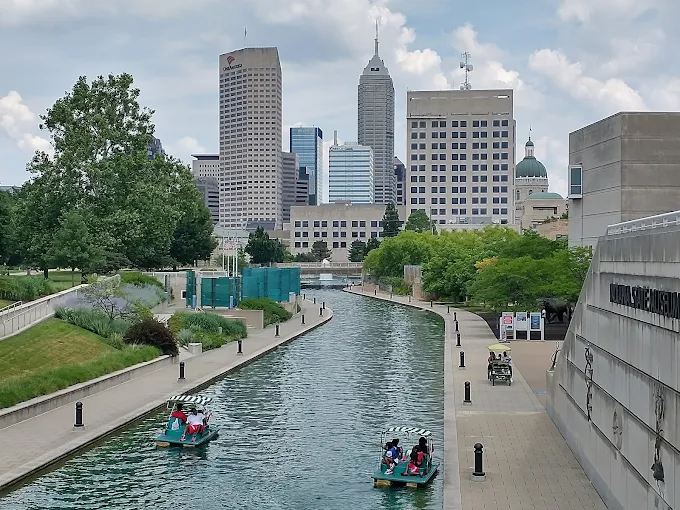
Foster Park and Highland Park, Kokomo Beach in the summer, downtown restaurants and First Friday energy, Wildcat Creek, golf, youth sports, the Seiberling Mansion, and a live music calendar that fills up without requiring a weekend in Indianapolis. You are not giving up a social life to live north of the metro — you are choosing a shorter drive home after the game.
Errands stay local: grocery stores, Community Howard and Ascension St. Vincent Kokomo, shopping, and most employers are a short hop across town. Commutes inside Howard County are measured in minutes. US-31, SR-26, and SR-22 put you on a predictable path to Indianapolis, Logansport, Marion, and Lafayette when you need the bigger city — then you come back to a place where parking is not the evening’s main event.
Kokomo is a real city, not a gated suburb. Neighborhoods vary, and the ones families shop hardest — Indian Heights, Northwestern, Western, and the west and south sides of town — are places you can walk the block, know the neighbors, and still be ten minutes from work. Walk the street or walking trails at dusk, you're safe here.
Kokomo School Corporation covers the city. Northwestern, Western, Taylor, and Eastern Howard serve the townships many buyers specifically target. Private and parochial options sit alongside. School preference is often the first filter on a Kokomo search — tell us the district and we size the payment to the price band those streets actually trade in.
Indianapolis is about an hour south on US-31: the international airport, the Colts, the Paces, the Fever, concerts, and a larger job market without Hamilton County housing prices. Chicago is a half-day drive northwest. Cincinnati is a half-day southeast. You can work, visit family, or take a weekend trip without living inside those metros — and your mortgage payment stays a Kokomo payment.
Kokomo still prices like a Midwest industrial city, not like a suburb of Indianapolis. That is the starting fact most out-of-town buyers miss. You can commute toward Carmel, Westfield, or downtown Indy from parts of Howard County, but you are shopping a different housing stock: mid-century ranches, brick two-stories, pocket subdivisions, and a growing mix of new construction on the fringe. Inventory tightens in popular school and price bands and loosens in houses that need work.
A typical purchase still runs: conversation and pre-approval, agent search, offer, inspections, appraisal, underwriting, clear to close. In Howard County we want a licensed home inspector on almost every resale — HVAC, roof, and basement moisture are the three items that turn a pretty listing into a repair credit or a walk-away. Older housing near the city core can hide knob-and-tube, unpermitted additions, or well/septic setups just outside city utilities. New construction has a different calendar: builder contract, construction draws or a one-time close, and a CO before you move in.
Howard County also means county-level taxes, Indiana homestead timing, and title work through a local title company. None of that is mysterious, but it is not the same as buying in Hamilton County. We would rather build your payment with real escrow, then have you apply , than send you out collecting quotes that ignore taxes and insurance.
Need the first-timer version? See First Time Homebuyer .
There is no single “Kokomo loan.” There is a first mortgage that matches your occupancy, credit, down payment, and the house itself. Here is how we actually sort files in this market — and what to know about each program.
Our loan process was built with first-time buyers in mind! In Kokomo that usually means a conversation about your credit, income and assets, moving on to a secure loan application to provide us the fine print, and then a face-to-face meeting to review the home buying process, housing market, interest rate strategy and home financing options. All designed to make you comfortable with your options and moving forward with a winning game plan!
Low-down conventional (3%) and FHA (3.5%) are the default comparison. VA and USDA, when they fit, can beat both on cash to close. Education is not optional window dressing: HomeReady, Home Possible, and several assistance seconds require an approved course before closing. We point you to Home Buyer Education so you take Fannie Mae HomeView or Freddie Mac CreditSmart once, the right way, instead of paying twice for a class an underwriter will reject.
For a Kokomo purchase, we also walk you through local taxes, USDA eligibility around town, and which assistance programs you can actually use here. You can learn more on our First Time Homebuyer page.
Indiana property tax is assessed at the parcel, billed by the county, and often escrowed by your mortgage servicer. Howard County is not a flat “one rate for Kokomo.” Taxing districts differ between the city and surrounding townships. Assessed value is not the same as purchase price, especially in a rising or falling market, and it can lag a recent sale.
Owner-occupants should plan around the homestead standard deduction and, when eligible, the supplemental homestead deduction. Those filings typically happen after you close and occupy — they are not a lender form we submit with the 1003. Until homestead is on the tax record, an escrow estimate may look high relative to what a long-time owner pays next door. That is a timing issue, not a bait-and-switch.
Indiana’s circuit-breaker tax caps limit bills as a percentage of gross assessed value (with different caps for homestead, other residential, and other property). We mention that so you understand why two similar houses can still produce different bills. We will not invent a round-number millage for “average Kokomo.” Your title commitment, last tax statement, and the auditor’s parcel record are the source of truth. New construction can have a dramatic first-year versus second-year pattern; budget with a cushion.
Taxes plus homeowners insurance plus any HOA equal the rest of PITI. If you only compare principal and interest quotes from two lenders, you are not comparing the payment you will actually write each month. Use the mortgage calculator below with a conservative tax percentage, then let us replace that guess with the parcel’s history when you are under contract.
The county’s Beacon map is the public record for a Kokomo or Howard County parcel: owner of record, assessed value, tax history, legal description, and sales history. Pull the parcel before you write an offer or lock an escrow estimate — then send us the address and we will reconcile it against the quote.
Cash to close is down payment plus closing costs minus credits. Howard County closings include the same buckets you see statewide, priced by the actual title company, appraisal panel, and prepaid items — not by a national blog’s “2% to 5%” slogan.
Origination or broker compensation (how we are paid is disclosed), underwriting, processing, credit report, flood cert, and lock-related fees if any. We disclose on the Loan Estimate. Compare apples to apples: a “no origination” quote can hide a worse rate.
Owner’s and lender’s title, search, closing fee, recording, and Indiana transfer items as they apply to the contract. The seller often pays some title pieces by local custom; your purchase agreement controls, not custom alone.
Per diem interest, first year of homeowners insurance, and several months of tax and insurance into escrow. This is why two identical rates produce different checks at the table.
Seller concessions within program caps, lender credits in exchange for rate, and Brighter Closing when you qualify for that client benefit. Read Closing Costs and seller-paid cost rules before you write a concession into an offer you cannot support.
Kokomo buyers use Indiana-administered products and Luminate / national partners. Availability depends on income, first-time status, credit, property type, and whether you will occupy the home. We match you to the product you actually fit — stacking the wrong second lien is how people get stuck at refinance time.
Learn more about Down Payment Assistance
USDA is a geography product first and a credit product second. The City of Kokomo, as a denser urbanized area, contains large stretches that the USDA map treats as ineligible. Drive a few miles into township land, neighboring small towns, or adjacent counties and the map often flips.
If the property is eligible, household income must sit under the limit for the county and household size. USDA counts adult household members in ways that surprise people who only look at the borrowers on the note. Occupancy is owner-occupied primary residence. Guarantee fees apply. Property condition still has to pass; a cheap rural house with no heat is not a USDA win.
Read USDA Loans , What Areas Qualify , and Are USDA Loans Really Zero Down? before you tell a seller you are “USDA pre-approved for this house.” The letter is only as good as the map.
Screenshot the USDA eligibility result, or just text the street. If it fails, we switch the same income file to FHA or conventional without making you start over.
Several highly-rated home builders in Kokomo, Indiana, offer services ranging from fully custom high-end estates to attainably priced planned communities. The top options include Cardwell Built, ESC Homes, Hallmark Homes, Citation Homes, Monroe Custom Homes, Majestic Homes, and community builders like Arbor Homes.
Home Builders Association of Howard County
Follow them on Facebook for local builder news, events, and new construction around Kokomo.
How you finance the house depends on the builder. Some will finance the build themselves, and you close a typical purchase mortgage once the home is complete. Custom builders often require a one-time close or two-time close construction loan to fund the construction phase. Learn more about our Construction Loans , including one-time close and two-time close .
Not every home is move-in ready. Plenty of Kokomo listings need work before you can live in them the way you want.
With traditional financing, you are only allowed to borrow the sales price or the appraised value — whichever is lowest — minus the down payment requirement. That as-is cap is why a standard purchase loan will not cover the extra cost of repairs.
If you want to buy a home that needs some TLC, we have a variety of renovation loans that allow you to finance more than the sales price. Start with Renovation Loans , including FHA 203(k) and Fannie Mae HomeStyle .
Estimate principal, interest, tax escrow, insurance, and PMI. Defaults are a Kokomo-typical price band and a conservative tax line — not a quote. For side-by-side tools and a qualifier calculator, open Loan Calculators .
Estimated monthly payment
You are all set.
We will send your numbers over and follow up personally.
We will email a breakdown with current pricing and next steps. No obligation.
$80k–$100k below Indiana
The median price to purchase a home in Kokomo sits roughly $80,000 to $100,000 below the Indiana statewide baseline. That gap makes Kokomo an attractive market for cost-of-living relocations. Nationally, Kokomo offers homes at nearly half the price of the U.S. average.
Sub-$150k still active
Statewide, properties priced under $250,000 have seen a 10% dip in successful pending contracts because buyers are more sensitive to interest rates. Because Kokomo’s base pricing naturally sits in this more affordable tier, the local sub-$150k segment remains highly active. Sellers in this bracket are seeing slightly more price cuts — averaging 10% reductions — as buyers negotiate harder on repairs and rate buy-downs.
+9% local supply vs. +20–30% Indy
In nearby Indianapolis and major suburbs (like Carmel or Fishers), inventory has surged by 20% to 30%, handing significant leverage over to buyers. Kokomo’s supply has grown more conservatively (+9%), so it has not experienced the same sharp transition toward a buyer’s playground as portions of the Indy metro area.
Straight answers first, then how the process works, a Kokomo example, and what to watch for.
Quick answer
How it works
Example
Important exceptions
Ryan & Steve’s take
Official guidelines / sources